About Sattva Group
A three-decade journey defined by 80 million square feet of delivered space and an uncompromising commitment to engineering excellence. Founded in 1993 and headquartered in Bengaluru.
Sattva Group Company Profile
Founded in 1993, the Sattva Group (formerly Salarpuria Sattva) has grown from a specialized residential developer into one of India's most diversified and financially robust real estate conglomerates. With a footprint across seven major Indian cities - primarily Bangalore, Hyderabad, and Mumbai - the group has successfully completed over 140 projects, totaling more than 80 million square feet of built space.
What distinguishes the Sattva Group is its record of partnership with global institutional giants. The group is the preferred development partner in India for firms like Blackstone and Apollo Global Management, reflecting a level of operational transparency and fiscal discipline that is rare in the real estate sector. This is further validated by a consistent CRISIL A+ rating, which ensures that ambitious large-scale launches like Sattva Songbird Phase 2 are backed by secure capital and planning precision.
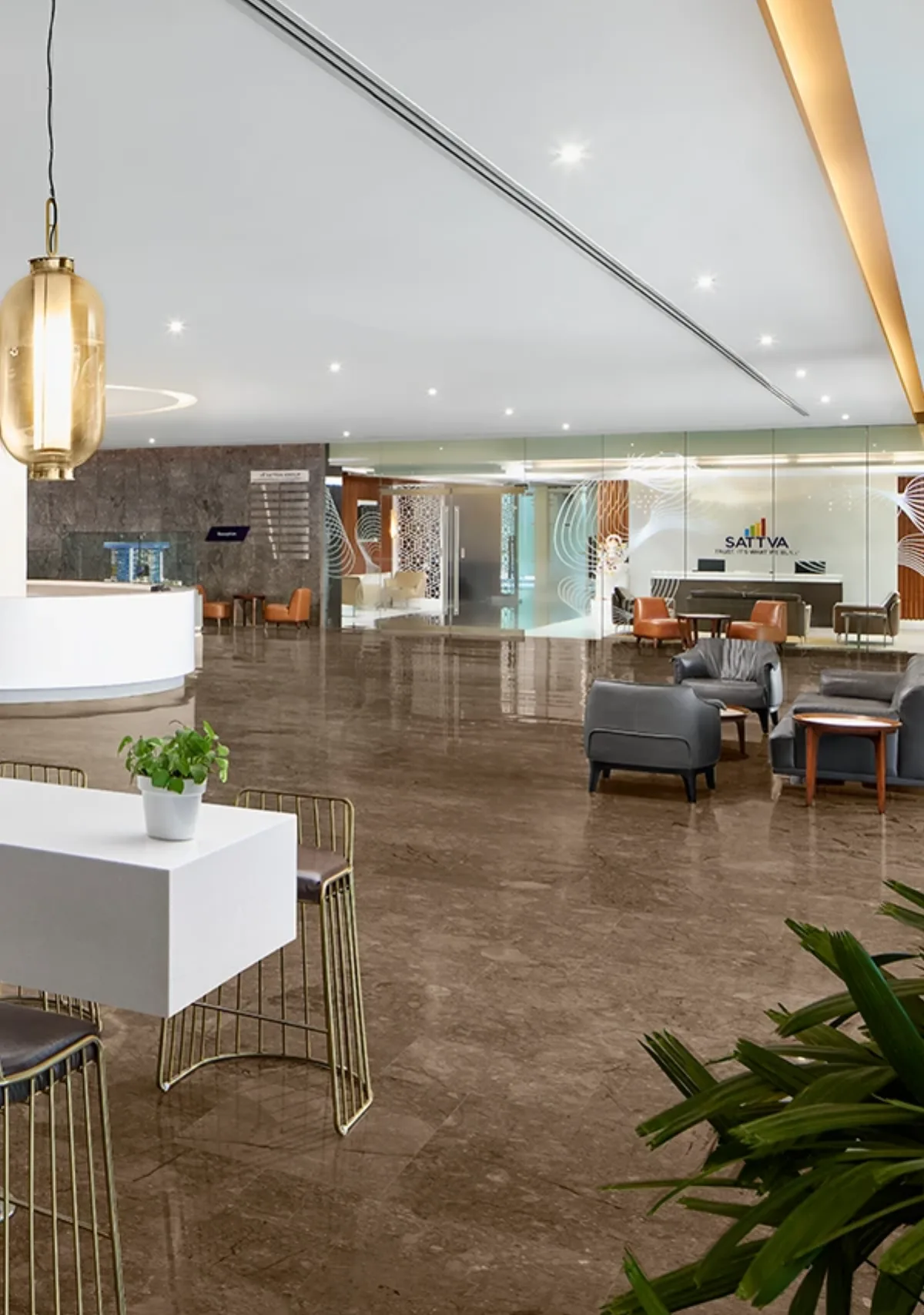
Built on a Bedrock of Financial Trust
Commercial Excellence
Sattva Group controls some of India's most iconic Grade-A tech parks, housing Fortune 500 companies in Bangalore and Hyderabad. This commercial expertise directly influences the high-performance building systems (Mivan, dual-piping) used in their residential high-rises.
Beyond Real Estate
Their portfolio extends into Educational infrastructure (Greenwood High Schools), Co-living (Colive), Data Centres, and high-intensity Logistics and Warehousing, making them a true multi-sector conglomerate.
The Sattva Journey: A Narrative of Resilience
The real estate landscape of Bangalore is defined by developers who survived the transitions of the 1990s and matured during the IT boom of the 2000s. The Sattva Group, founded in 1993, stands as a primary architect of this transformation. Originally established as Salarpuria Sattva, the group has evolved from a boutique residential builder into a multi-city conglomerate with a footprint of over 80 million square feet of delivered space.
Commercial Pedigree: The Grade-A Benchmark
What differentiates Sattva from traditional residential developers is its absolute dominance in the Grade-A Commercial sector. The group owns and operates some of India's most high-performance tech parks in Bangalore and Hyderabad, serving as the landlord to Fortune 500 giants. This commercial pedigree directly influences their residential projects like Sattva Songbird. The engineering standards, the speed of vertical construction, and the high-maintenance facility management systems seen in their tech parks are translated into their luxury housing units, providing residents with a level of operational reliability that is rare in the sector.
Institutional Trust: The Blackstone-Apollo Partnership
In the capital-intensive world of high-rise real estate, financial stability is the ultimate marker of trust. The Sattva Group maintains an enviable record of Global Institutional Partnerships. The group is the preferred Indian partner for Blackstone, the world's largest alternative asset manager, and Apollo Global Management. These partnerships involve rigorous due diligence and lean financial auditing, ensuring that every project launched by Sattva - including Songbird Phase 2 - is backed by secure capital and managed with institutional-grade transparency.
Diversification: Beyond the Residential Horizon
Today, the Sattva Group is a truly diversified entity. Their portfolio includes Greenwood High International Schools, which are consistently ranked among the best in India, and Colive, a leading co-living platform catering to Bangalore's rising millennial workforce. Furthermore, the group has expanded into Data Centers, Warehousing, and Aerospace, making them a "Lifestyle Platform" rather than just a builder. This multi-sector exposure allows them to cross-leverage expertise in construction, sustainable energy, and community management across all their residential developments.
The group's CRISIL A+ Rating is a reflection of this diversified strength. It provides buyers with the assurance that their investment is managed by a fiscally conservative but operationally aggressive organization that has never defaulted on a project delivery timeline. For a 42-storey project like Songbird, this developer credibility is the most important "Invisible Amenity" that ensures the project will reach its capped elevation as scheduled in its RERA filing.
Engineering Innovation: Adopting the Future
Innovation at Sattva is driven by a commitment to Sustainable Engineering. The group was among the early adopters of Mivan Formwork and BIM (Building Information Modeling) in India. By simulating the entire construction process digitally before breaking ground on projects like Songbird, the builders minimize material waste and optimize structural efficiency. This focus on "Lean Construction" is what allows them to maintain competitive pricing while delivering specifications that often exceed the local market benchmarks.
What to ask Sattva specifically for Songbird Phase 2
Group credentials matter, but your cheque funds this parcel on Budigere Main Road. Request the project-specific organisation chart: who owns construction, sales, CRM, and defect liability after handover? For 42-storey twins, clarify lift vendor, refuge-floor strategy, and façade maintenance unit paths - generic brand decks skip those answers.
Ask how capital is structured for Phase 2 versus the wider Songbird land entity. Institutional partners may sit at hold-co level; you still need transparency on milestone funding so slab pours are not delayed by unrelated portfolio stress. Compare payment schedules with photographs from site cameras or third-party project trackers if available.
Facility management previews help: visit a delivered Sattva high-rise of similar density on a Sunday afternoon. Study pool chemistry logs, gym crowding, and how security handles food-delivery surge. Those observations predict your maintenance fights better than any ledger statistic.
Peer benchmarking without losing the plot
It is useful to contrast execution cultures. A mid-rise, family-format community such as Habulus Tranquil shows how builders stage amenities when towers stay under twenty floors; Songbird's verticality demands different lift and fire narratives. A plotted benchmark like KNS District 30 reminds you to ask about land titles and future phase roads even when you are buying apartments, not plots.
If you are cross-city shopping, glance at Hallmark Altus for how Hyderabad teams message sky amenities - then translate lessons back to Bengaluru's RERA portal and stamp-duty math.
Close every builder conversation by walking the actual approach road, not the gallery carpet. Groups with stellar reputations still mis-model traffic noise; your ears are part of due diligence.
RERA, escrow, and what you can verify without charm
Songbird Phase 2 is listed under Karnataka RERA (ID in the site footer). Treat the portal as your primary ledger: sanctioned plans, declared timelines, quarterly progress uploads, and promoter disclosures should all reconcile with what sales hands you in hard copy. If a brochure floor count or acreage disagrees with the filing, pause - not every mismatch is sinister, but every mismatch needs a written clarification before you transfer an EOI.
Escrow discipline is the boring hero of pre-launch buying. Ask how customer advances route into the RERA-prescribed account, who signs off on drawdowns tied to construction milestones, and how you will see evidence of those draws in your buyer portal or email trail. Institutional developers usually pass this test; the goal is to leave no grey zone that a busy RM can wave away verbally.
Engineering audits matter more at 42 floors than at 14. Request the latest geotech summary, wind-tunnel or façade pressure assumptions if available, and the fire-narrative for refuge floors and lift redundancy. You are not trying to out-engineer the consultant - you are checking that answers exist on paper, not only in a sales deck animation.
After you shortlist, compare promised specifications against a delivered Sattva tower of similar height class. Walk common areas with a critical eye: sealant lines, lift door alignments, pool deck slopes. Those details predict how Phase 2 will age better than any award list.
Finally, align your lawyer's checklist with the builder's draft agreement early. Delayed legal review is how buyers discover unacceptable penalty asymmetry or vague possession clauses weeks after they have emotionally committed. Sattva's scale should make documentation crisp - if it is not, that is data too.
Keep a simple diligence folder: dated brochures, email confirmations on specifications, RERA PDFs, and photos from each site visit. When Phase 2 is mid-rise and questions arise about a changed stack or amenity timing, that folder is your memory - and it is far more persuasive with bankers and resale buyers than screenshots buried in chat apps.
Contact Sattva Group
- Website: https://sattvagroup.com/
- Phone: 1800-121-3344
- Email: [email protected]
- Corporate Office: 4th Floor, Sattva Windsor, #3 Ulsoor Road, Bengaluru 560042
Sattva Songbird Phase 2 - Enquire Now
Speak with a sales consultant for brochures, cost sheets, site visits, and availability.
Sattva Group - Frequently Asked Questions
Sattva Group (formerly Salarpuria Sattva) is developing Sattva Songbird Phase 2. The group is a Bengaluru-headquartered diversified developer with residential, commercial, and education assets across India.
Site collateral cites Sattva Group's heritage from 1993, framing it as a multi-decade Bengaluru-headquartered developer. Specific delivery dates and possession history per project can be cross-checked on the Karnataka RERA portal and the group's official website.
The group's portfolio is cited at 140+ projects and over 80 million sq ft delivered across residential, commercial, and education segments. Site material also references an A+ CRISIL rating in the developer's track record.
Track record is a useful signal, but every project still has its own RERA registration, sanctioned plan, cost sheet, and contractual agreements. Verify per-project specifics for Phase 2 rather than relying on developer reputation alone.
The group's official site at sattvagroup.com lists corporate history and ongoing projects. The Karnataka RERA portal is the authoritative source for active registrations, sanctioned plans, and quarterly progress filings.
Search the Karnataka RERA portal for the registration PRM/KA/RERA/1251/310/PR/270326/008557 and check the attached promoter documents, sanctioned plan extracts, and escrow details. Match those filings against the cost sheet, allotment draft, and any verbal claims before paying booking money.